What "Hidden Mickey" Actually Means
Before it was a pin category, a Hidden Mickey was architecture. According to D23, Disney's official fan club, the tradition started in the 1980s as a private joke among Imagineers, who began slipping Mickey's silhouette into attractions and set dressing largely without anyone signing off on it. The most common form — three overlapping circles reading as a round head and two round ears — is what fans call a "Classic Mickey," though plenty of Hidden Mickeys are drawn, carved, or arranged out of unrelated objects instead.
Guests didn't start hunting for them in any organized way until 1989, when a cast member named Arlen Miller published the first known list of sightings in Eyes and Ears, Disney's internal cast publication, according to Wikipedia's summary of the tradition's history. The idea spread from there, Imagineers started adding them on purpose, and fans have since cataloged roughly 1,000 of them across Disney's parks and resorts.
From Park Easter Egg to Trading Pin
The pin version of the idea is a separate, later thing. Collectors who've cross-referenced archived release records on Disney Pin Forum trace the series back to the "Cast Lanyard" pins Walt Disney World began issuing to cast members for on-the-job trading starting in April 2002, with Disneyland Resort following with its own set the next year. The line was renamed "Hidden Mickey" in 2006, and the new name stuck for most of the next decade and a half.
That changed again in September 2020, when WDWNT reported that Disney had rebranded the series "Hidden Disney" and widened it well past Mickey — that first renamed series included Star Wars droid pins, Marvel icons, Pixar shorts, and Disneyland's own "D" series, alongside the usual castle and character fill designs. Mickey-themed entries are still common in every wave, but the "hidden" icon on the front can now be almost anything in Disney's library.
How Hidden Disney Pins Work Today
The defining rule hasn't changed since the Cast Lanyard days: these pins are made for trading with cast members, not sold outright when they first release. A cast member wears a lanyard stocked with the current wave, and guests trade a pin of their own for one off that lanyard, following whatever trading rules are posted at the time — our guide to Disneyland's current pin-trading rules covers the specifics of trading with cast members today.
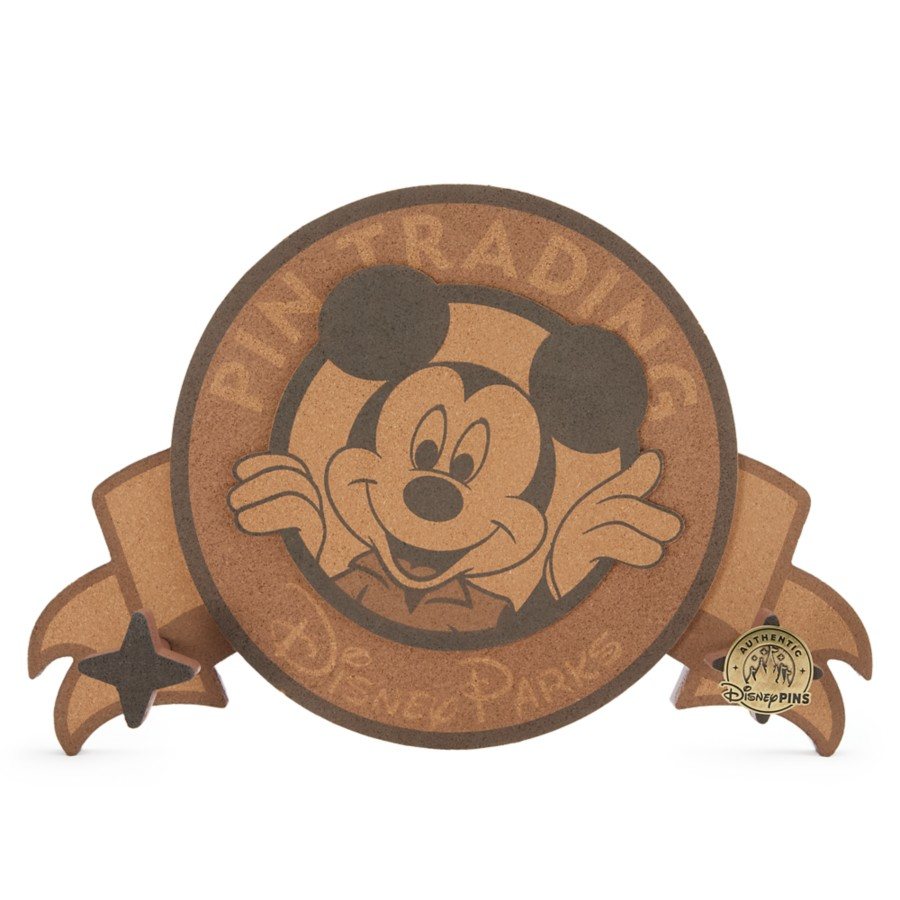
Each wave typically ships a handful of standard designs — around five is common — spread across one or more sub-series. According to Laughing Place's coverage of a recent relaunch, Disney has also started following a cast-member wave with a retail mystery pouch later on, adding an extra "chaser" design — and in at least one set, a rarer "super chaser" — into the mix. We cover how that mystery-box mechanic and the broader "chaser" concept work across Disney's pin lineup in our guide to Disney mystery pin boxes.
Why Hidden Mickeys Are a Scrapper Magnet
Because Hidden Disney pins were never sold directly at launch, there's no receipt, no product page, and no purchase history behind any individual pin once it's off a cast member's lanyard — which is exactly the kind of gap scrappers and counterfeiters exploit. We rank this category at the top of our watch list of the most-faked Disney pin series for that reason: the demand to complete a set is high, the production runs are large, and there's effectively no "proof of purchase" culture to push back against a fake entering circulation.
Longtime collectors who track archived release lists on Disney Pin Forum note that the earliest Cast Lanyard and Hidden Mickey waves used a warmer, more yellow-toned metal finish and different back text than current releases. That's a reason to look closer at a pin whose finish doesn't match its claimed era — not, on its own, proof that it's fake.
The good news is that a Hidden Disney pin is still a Disney pin, so the same physical checks apply. Flip it over: a genuine back carries a crisp ©Disney stamp sitting in a clean waffle texture with no raised border framing it, which we break down fully in our back stamp field guide. The hardware matters too — see our guide to pin backs, posts, and locking clutches for what the post and clutch should look like.
How to Start Collecting Hidden Disney Pins
- Trade with cast members in the parks. This is the only way to get a current-wave pin at face value, subject to whatever daily trading limits the resort has posted at the time.
- Watch for retail mystery pouches. Later in a series' run, Disney sometimes sells leftover and chaser designs in sealed pouches through Disney Store or park shops — a legitimate, fully authentic way to fill gaps without trading.
- Follow a trading board or forum for release news. New waves aren't announced the way retail pins are, so collector communities are usually the fastest way to learn a set has dropped.
- Buy secondhand carefully. Once a Hidden Mickey or Hidden Disney pin leaves a lanyard or a sealed pouch, it's a secondhand pin like any other — our guide to buying Disney pins online safely covers what to check before you pay.
Trading for one tonight?
ScrapperScan reads the ©Disney stamp, waffle texture, and build quality from a photo of a pin's back and gives you a plain-English verdict in seconds — handy before you commit a pin from your own lanyard to the trade. Free on iOS.
Quick Reference: Is a Hidden Disney Pin Legit?
- Does the back carry a crisp ©Disney stamp inside a clean, unframed waffle texture?
- Does the metal finish and back text match what collectors report for that wave's release era?
- Is it being offered as a single trade or a small resale lot — not a "complete set" bundle, which is far easier to fake than to legitimately assemble?
- If it's a "chaser," does the seller's claim match Disney's own description of that set, rather than just a reseller's listing?
The Bottom Line
A Hidden Mickey — or Hidden Disney, as the series has been called since 2020 — is still, at its core, the same idea Imagineers started in the 1980s: Mickey (or now, almost anything else in Disney's library) hidden in plain sight. The pin version just turned that idea into a cast-member trading tradition more than two decades old, which is exactly why it's both one of the most collected categories in the hobby and one of the most imitated. Trade in the parks when you can, buy sealed mystery pouches when you can't, and scan before you pay a premium for anything secondhand — free on the App Store.